
Local energy delivery
Optical heating can target a defined region of interest instead of treating the entire support structure as the heater.
Non-contact photothermal heating
Deliver non-contact photothermal heating to a selected sample region for phase evolution, photothermal response, synthesis, and laser-assisted processing studies.
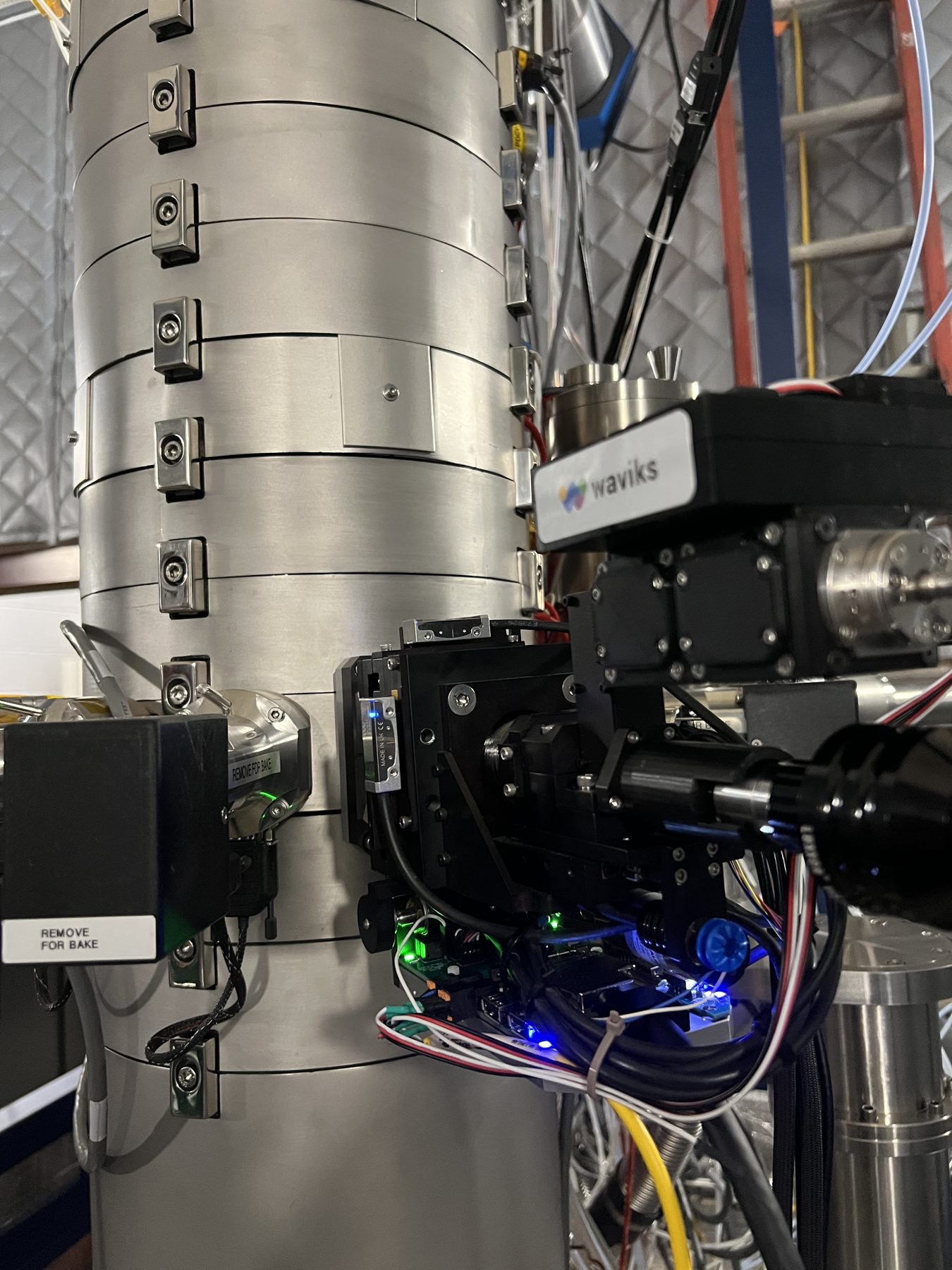
Heating overview
Waviks Laser Heating delivers local, non-contact photothermal heating to a selected sample region inside supported microscope or vacuum environments.
Use it for phase evolution, photothermal response, synthesis, or laser-assisted processing studies where the optical path and safety plan support the experiment.
Heating systems include an onboard pulser that drives compatible CW lasers with pulse widths as short as 50 ns. Pulsed laser sources are also supported.
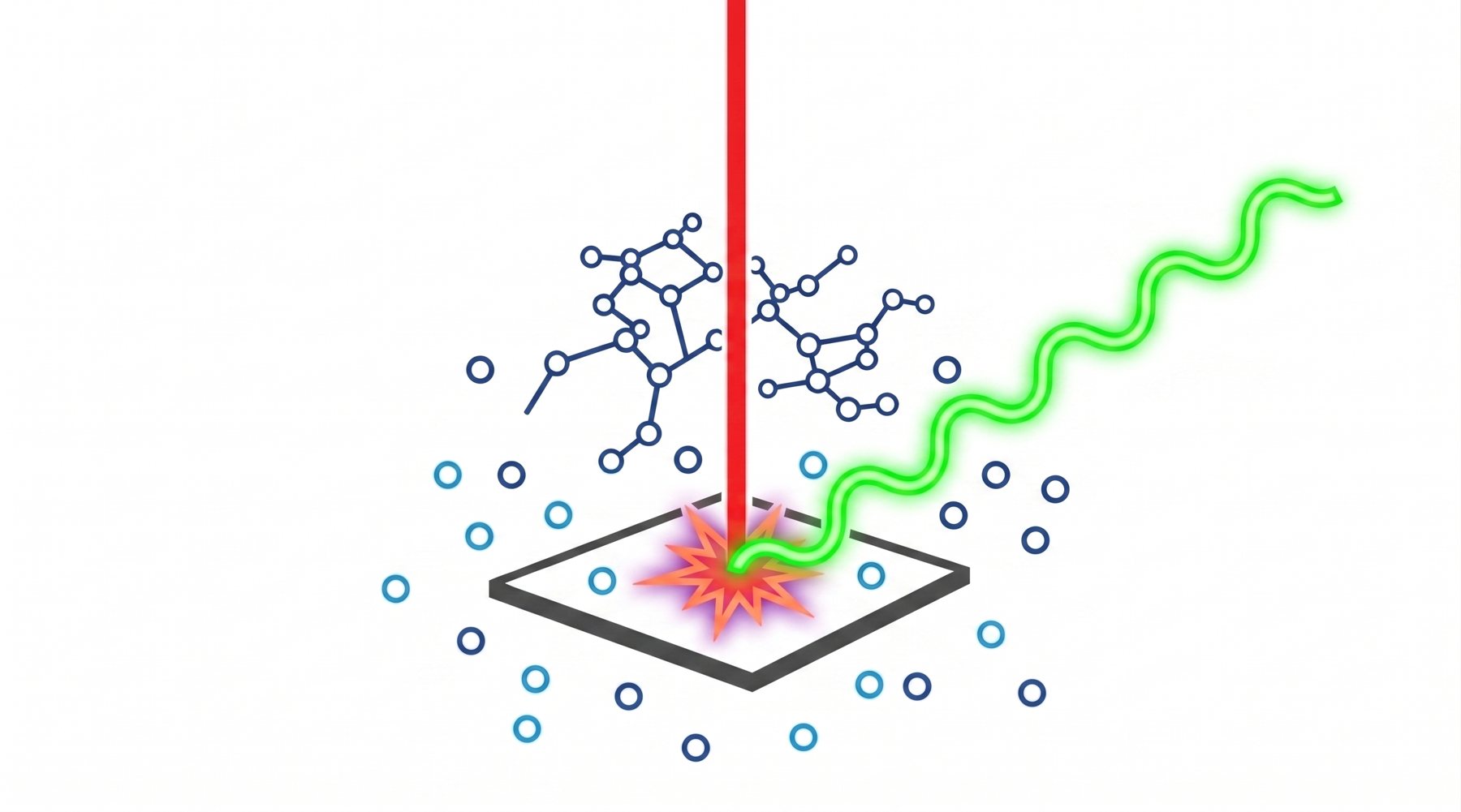
Why non-contact photothermal heating?
Non-contact photothermal heating is useful when local stimulation and microscope observation matter. Waviks reviews the installed instrument, sample, optical path, and safety requirements before recommending a configuration.
Optical heating can target a defined region of interest instead of treating the entire support structure as the heater.
The study can be planned around live microscopy, Aether alignment, and spectroscopy when the installation includes it.
Published Vesta-enabled TEM work uses spatial thermal variation to explore recrystallization, phase separation, grain growth, and dewetting pathways.
Explore annealing, cleaning, deposition, etching, and sample stimulation where optical access, sample chemistry, and installed hardware support the process.
Capabilities
Final configuration depends on microscope geometry, optical access, sample environment, thermal requirements, chamber constraints, and safety requirements.
Deliver optical heating to selected sample regions while keeping microscopy, measurement, and instrument control connected.
Support heating experiments inside SEM and FIB/SEM environments when chamber geometry, ports, and safety constraints allow it.
Discuss TEM optical heating paths where pole-piece geometry, holder design, and optical access can support the experiment.
Pair heating with Raman or optical measurements for temperature-dependent spectroscopy and response studies.
Study structural, chemical, optical, or electrical changes under ramped, pulsed, or steady laser exposure. Temperature response depends on the sample and optical conditions.
Use Aether for laser power, cameras, motion, illumination, heating profiles, and supported automation features.
Applications
Laser heating can support high-temperature materials studies, in situ stimulation, and correlative photon/electron workflows across research domains.
Investigate thermal response, phase behavior, and radiation-relevant materials questions under controlled heating conditions.
Study thermally driven behavior in materials where structure, chemistry, and optical response can evolve with temperature.
Follow temperature-dependent changes that benefit from direct correlation with microscopy or spectroscopy data.
Explore how local heating influences defects, microstructure, or optically observable materials response.
Support thermal studies of materials systems relevant to energy storage, conversion, and degradation pathways.
Build experiment paths for materials that require elevated-temperature stimulation inside advanced microscopy workflows.
Tell us your microscope, sample environment, target response, and measurement goals. Waviks can review the right laser heating path.